Eclipse 2026
12 Aug 2026 · Moon covers Sun, mostly.
Moon covers Sun, mostly.
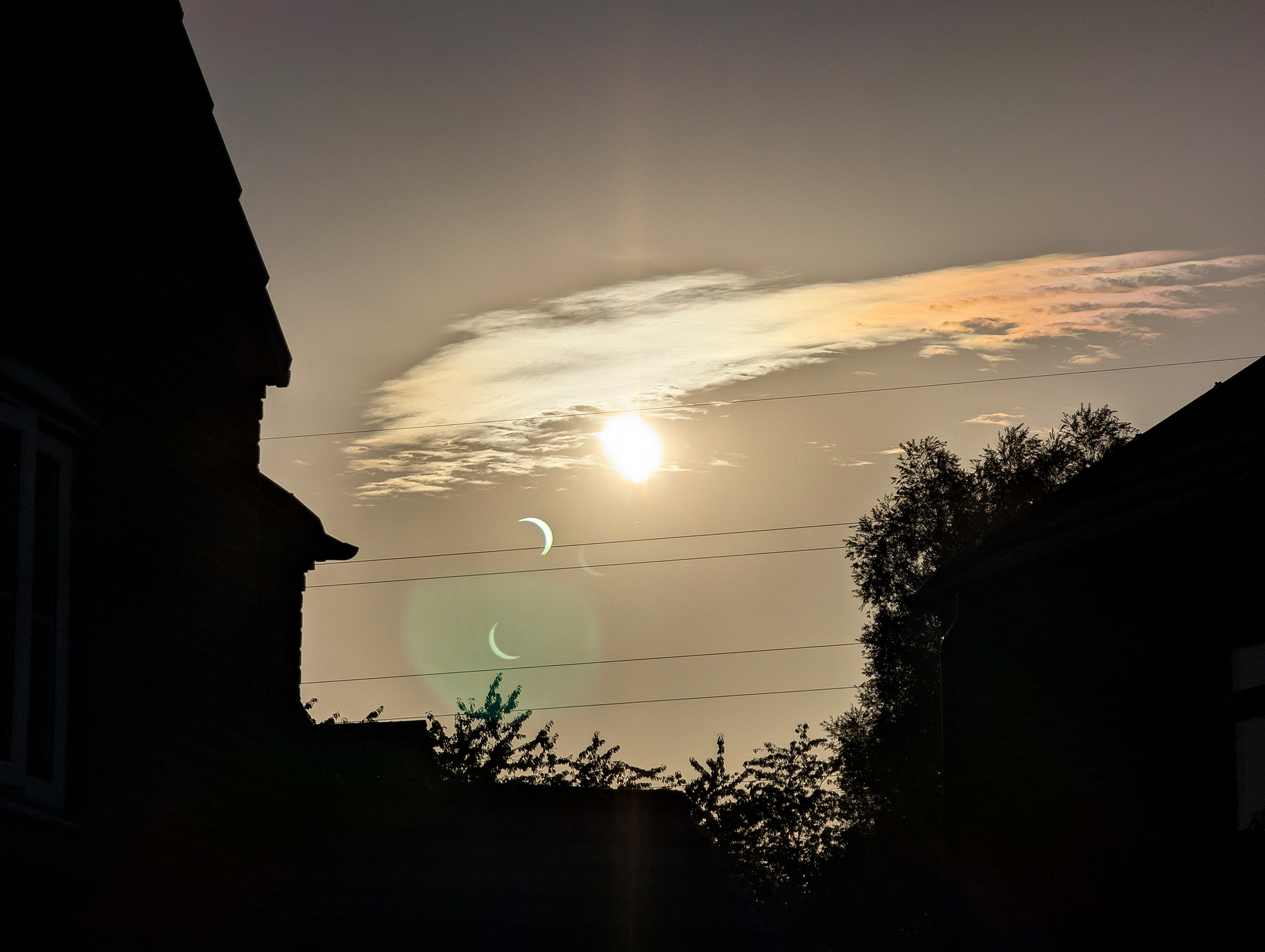
Every now and again in the celestial dance the sun, moon and earth line up in such a way that the moon covers the sun when viewed from earth. Well on the 12 August 2026 one of those alignments happened to occur over the skies of the UK. The last time a good one happened in the UK was in 1999, a quick google tells me it was on August 11th. I was stood outside of a now long since closed paper mill in Lancashire looking through a welding glass (I'm told this isn't safe and you shouldn't do it, my eyes are fine, YMMV). I recall the skies going dark, nature going quiet (the paper machine was off at the time, so I could hear nature) and everyone involved being collectively moved by the event.
Naturally when I heard that one was happening again I wanted to make sure to enjoy it again. This year's summer has been warm and dry in the UK, and 12th August was no exception, the skies were clear and cloud free, perfect eclipse watching conditions. I thought about welding glass, I thought about eclipse glasses and I figured I had time to build a pinhole camera. This is my story of the eclipse.
Reality Check
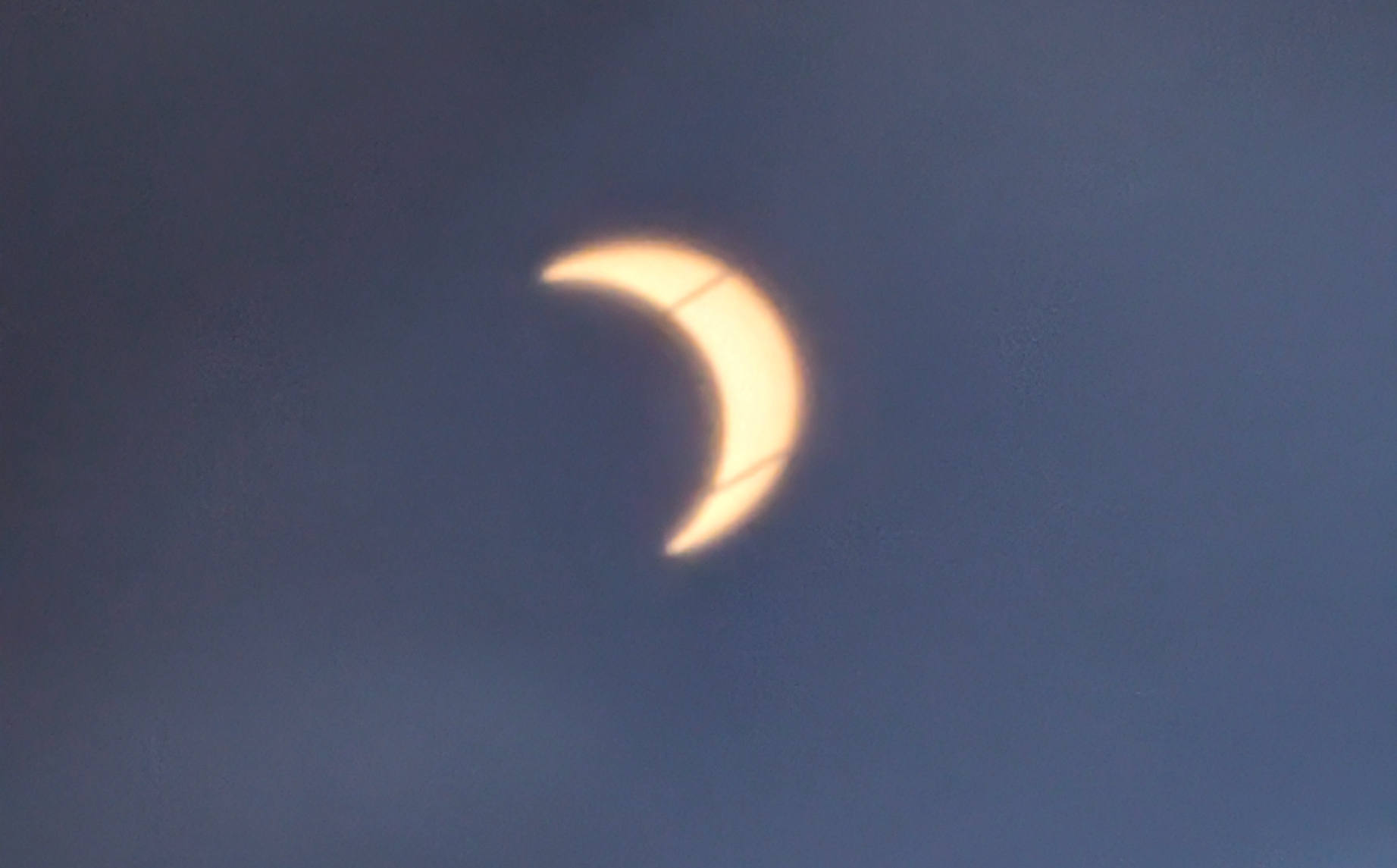
When you see an eclipse on the TV in films it's either CGI or someone has spent many many hours preparing thousands of pounds worth of equipment. When you see one for yourself, it won't look like the TV. Although the sun is massive, it's quite a long way away, so any image you capture of it will be quite small, you'll not see the sun's corona. The size was one of the things I wanted to try and fix with the pinhole camera.
Goals of the exercise
- Make the image bigger
- Make sure nobody goes blind
- Make it easy to see
- Make it easy to photograph
- Do something cool and sciencey with Mitch
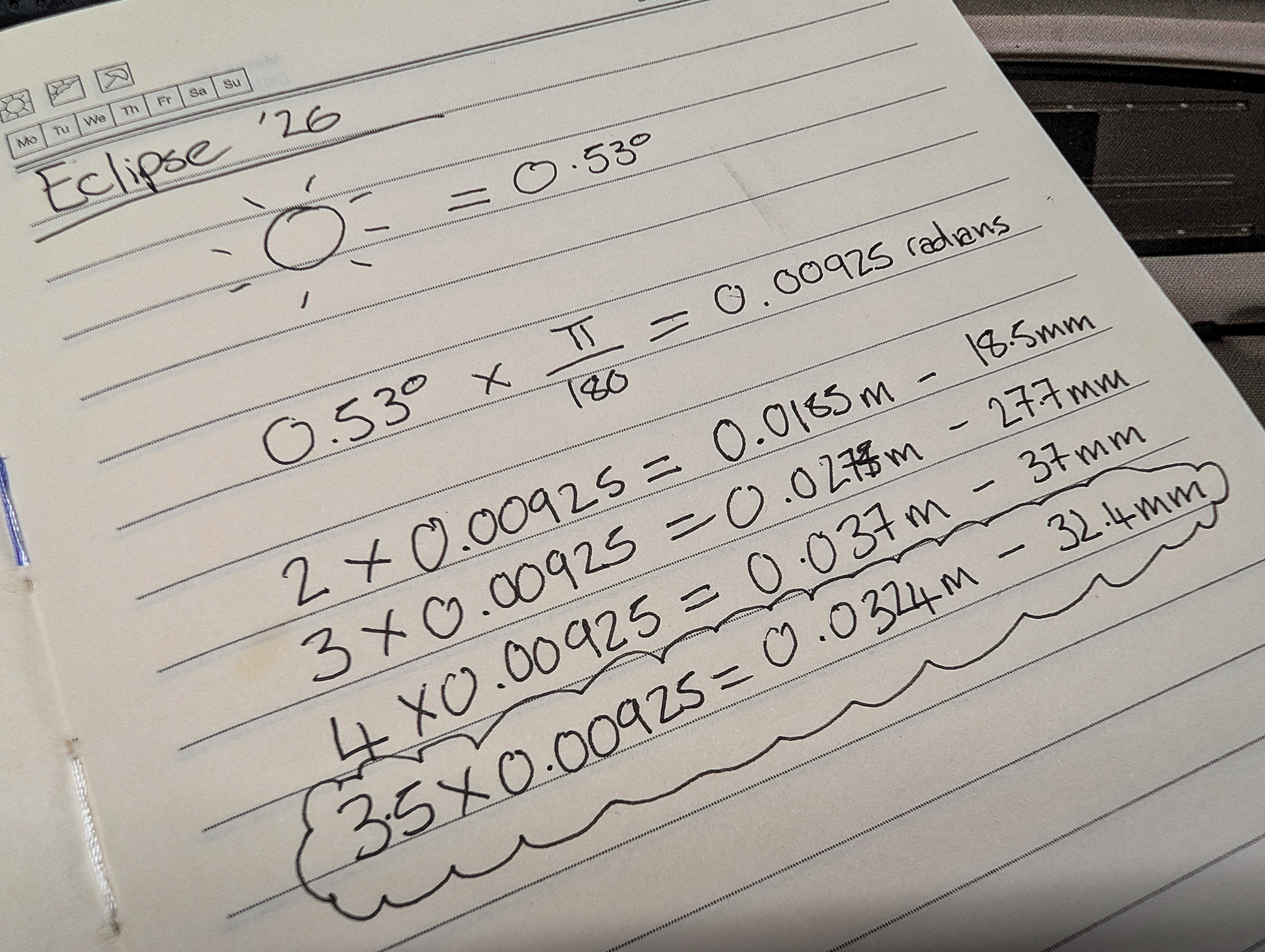
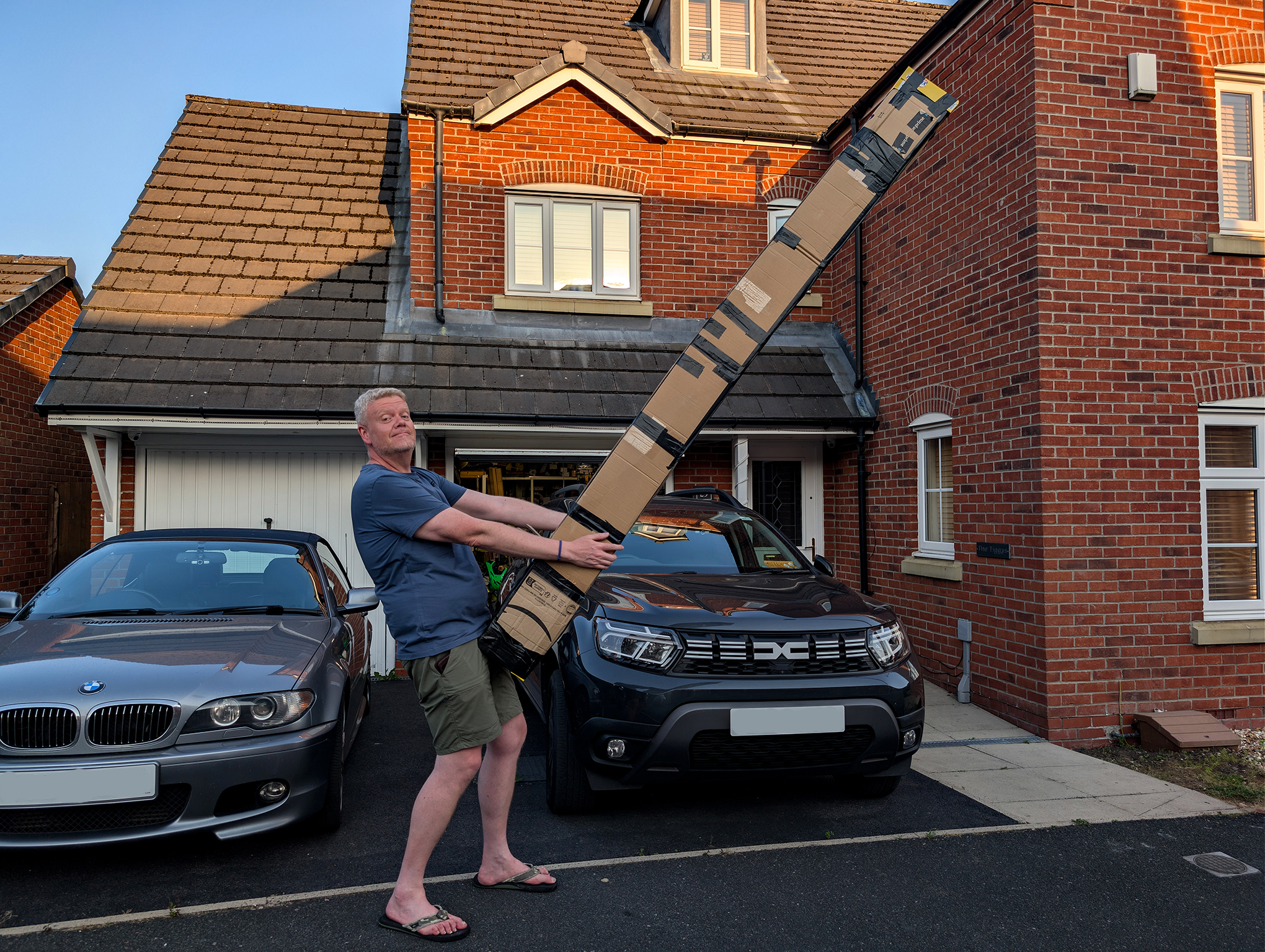
A pinhole camera works by taking advantage of the fact light travels in straight lines. A pinhole camera is a dark space with a tiny opening at one end (the pinhole, which is literally a hole made by a pin) and a projection surface at the other end. There's a balance to be struck with the size of the hole. If the hole is larger then more light gets in, but the image loses sharpness. Too small and the image is sharp but less light gets in so the image is dull. I found a push pin was just right, a sewing needle was too small.
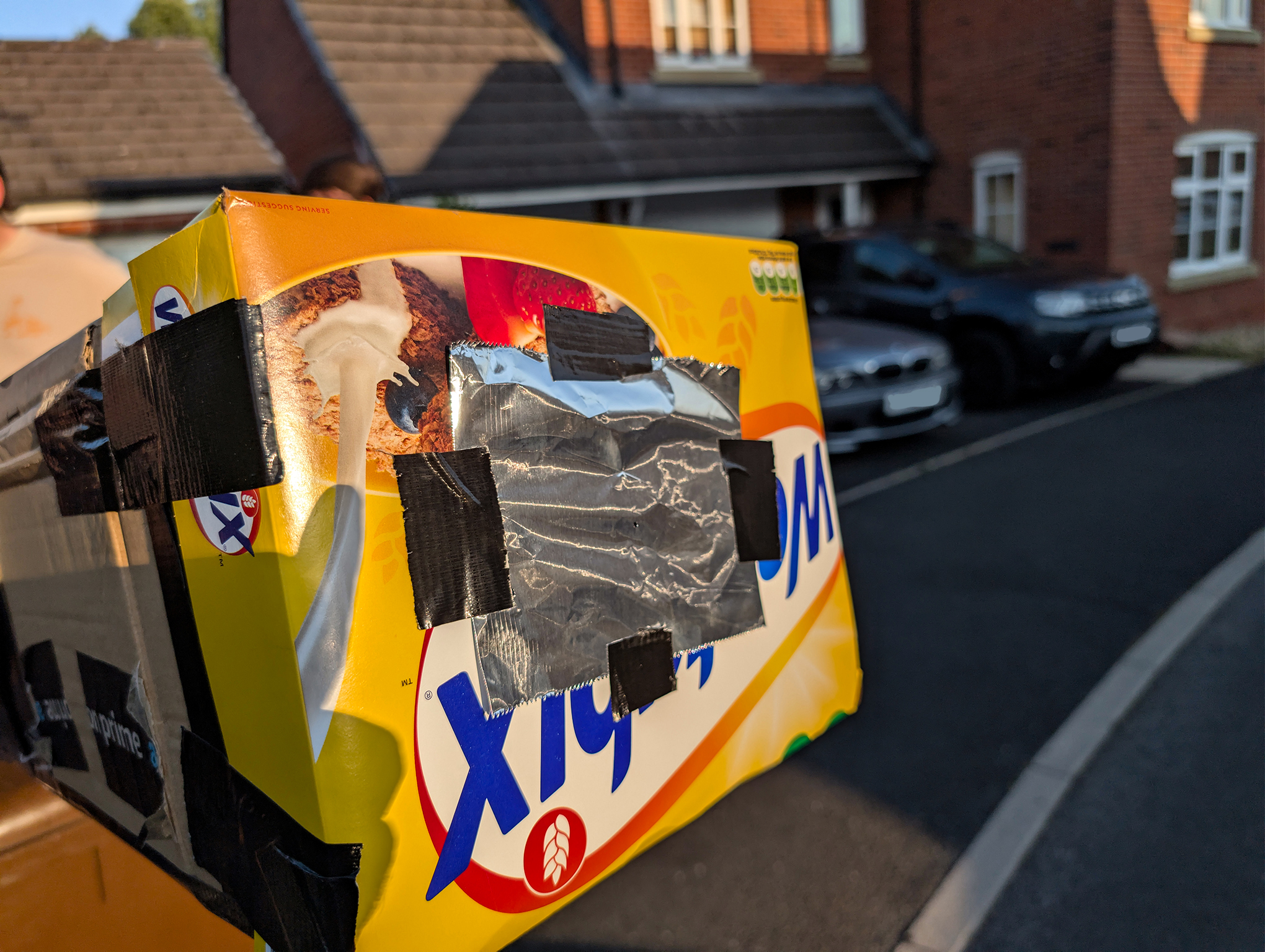
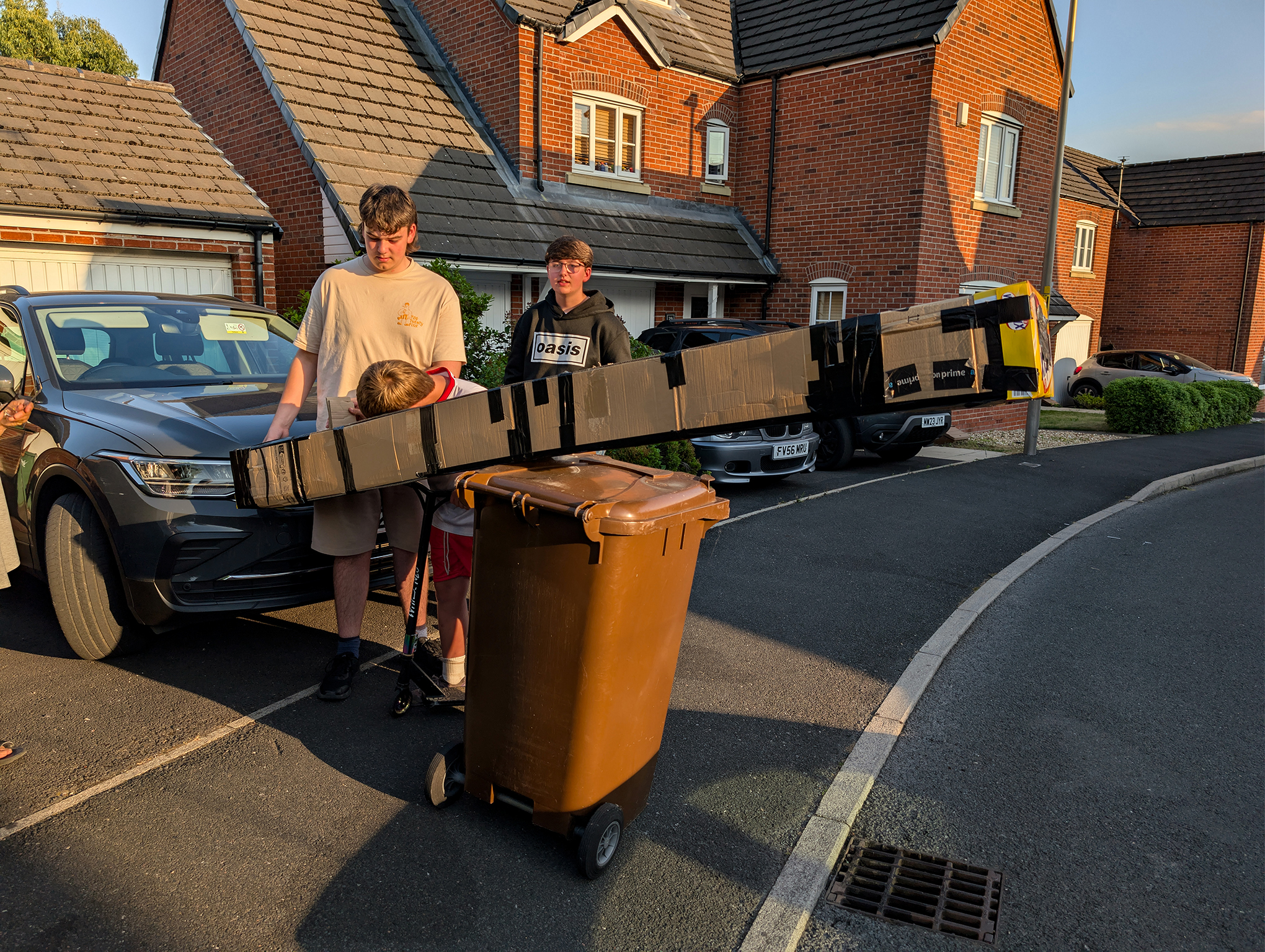
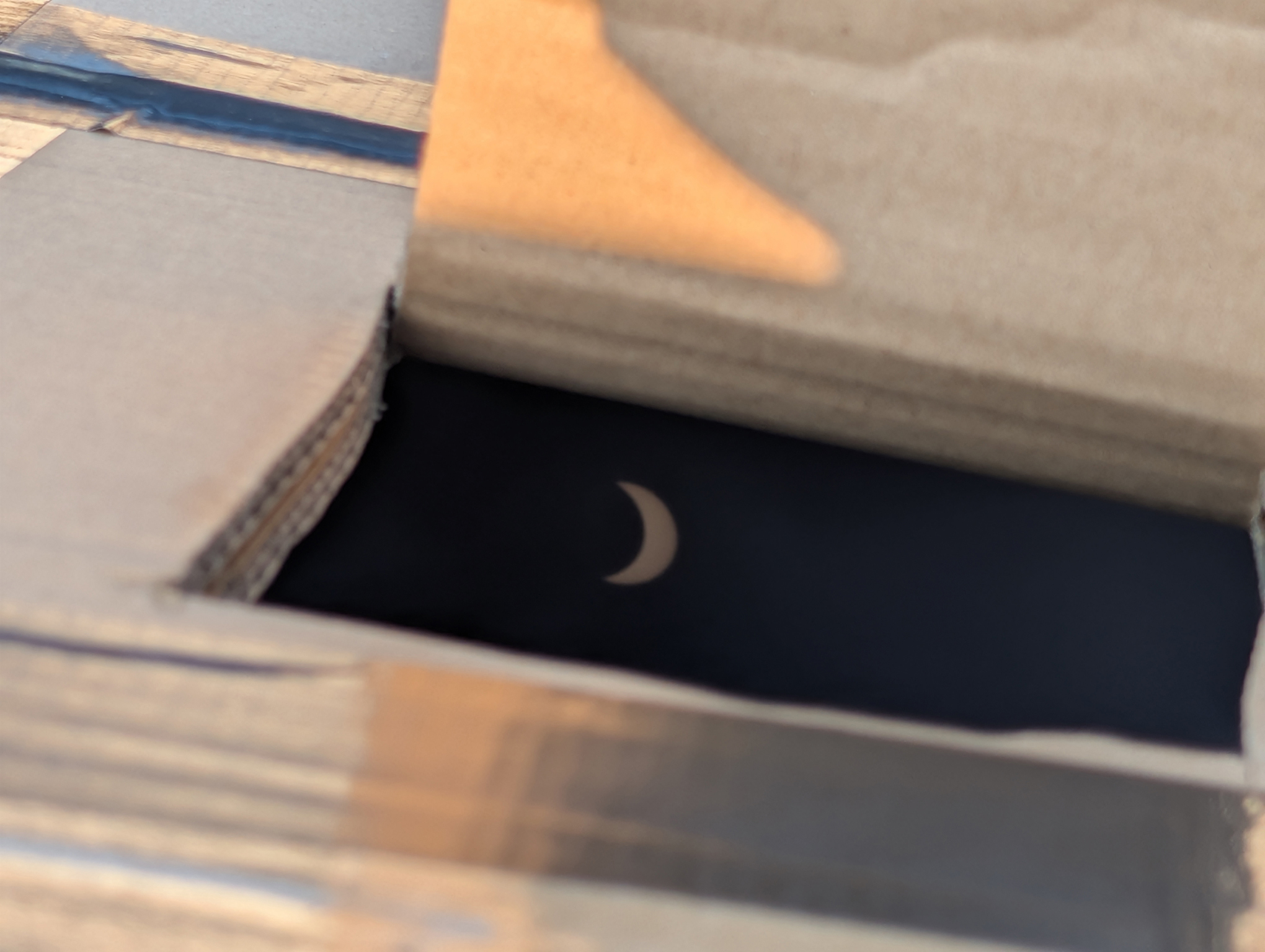
Item 4 on the to do list has the same solution as item 3, It's just a flap in the side. I made the flap big enough to poke a phone through and get a photo. Nice.
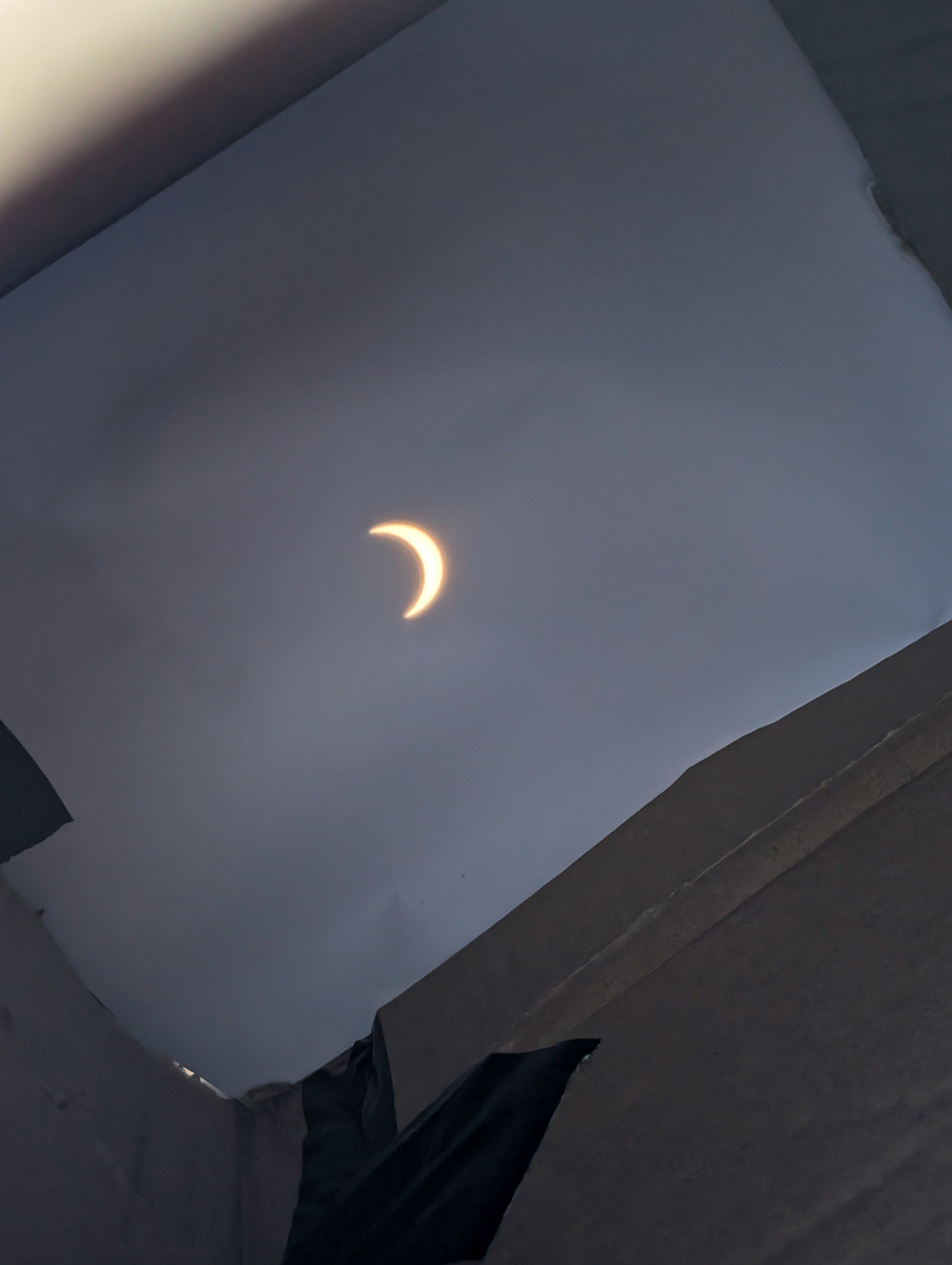
The final thing was to do something cool and sciency with Mitch. Mitch spent all day at footy camp and was asleep during construction, I did try and wake him twice, but he wasn't up for it. So I made it mostly on my own! He helped with the last bit and very much enjoyed looking through it, we had a couple of decent chats about how it works on the night and subsequently, so I'm taking that as a win too.