The photography gear I use (and some retired stuff I still love)
23 Nov 2025 · Cameras · Lights · Software
Photography Gear
Inside my bag
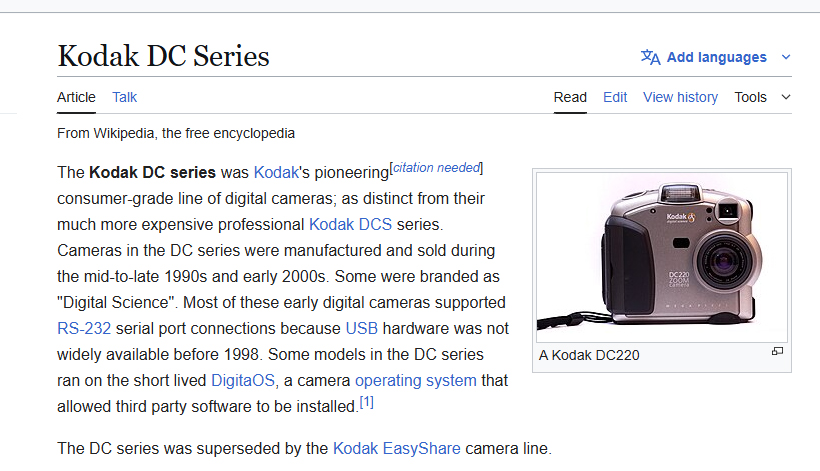
I first got into photography back in the late 90s. I worked as a draftsman for a firm in Bury who upgraded production lines, mostly in the paper industry, but they did all kinds of work on process control systems. I would regularly turn up at a production site, take as built photo's of panels or other process control systems and then use the photo's to update drawings I had done to become as builts. As a result of this work, I bought my first digital camera, a Kodak DC220 (if you look on the Wikipedia Page that first photo is mine, of my first digital camera, the Flickr page I used to have, is long since deleted). I've moved house since I took that photo and the camera is still in the box I put it in before moving. Maybe I'll dig it out and make friends with it again after writing this.
Kodac DC220, photo by me.
Cameras
Canon EOS 50D
I had a few more point and shoots before getting my first DSLR in sometime around 2006. It was a Canon 400D. I regret selling the 400D, but I needed to fund an upgrade! One of my friends had a 40D, and it just felt like a better camera, bigger body, faster, higher resolution sensor etc. I settled on the 50D, I had dreams about getting a 5D, but I was never able to justify the money for the body and then replacing all my lens' so I chose the 50.
I got it in Feb 2009, so that means I've had it for 16+ years, and it's still going strong. Sure, the rubber bits are peeling at the edges, the USB interface cover is missing, the shutter button is a bit iffy, but it still works and it still takes great pictures. I've never not used it and never felt the need to upgrade it. It was and still is all the camera I need.
It's been to some interesting places, underground in many an abandoned mine, up cranes, in drains, in many abandoned places (back in the day, before kids I was something of an urban explorer), family holidays, theme parks, work events, many weddings, and to most of the other significant events in my life. I suppose it'll give up eventually, but it will always have a place on my shelf, even when it's dead.
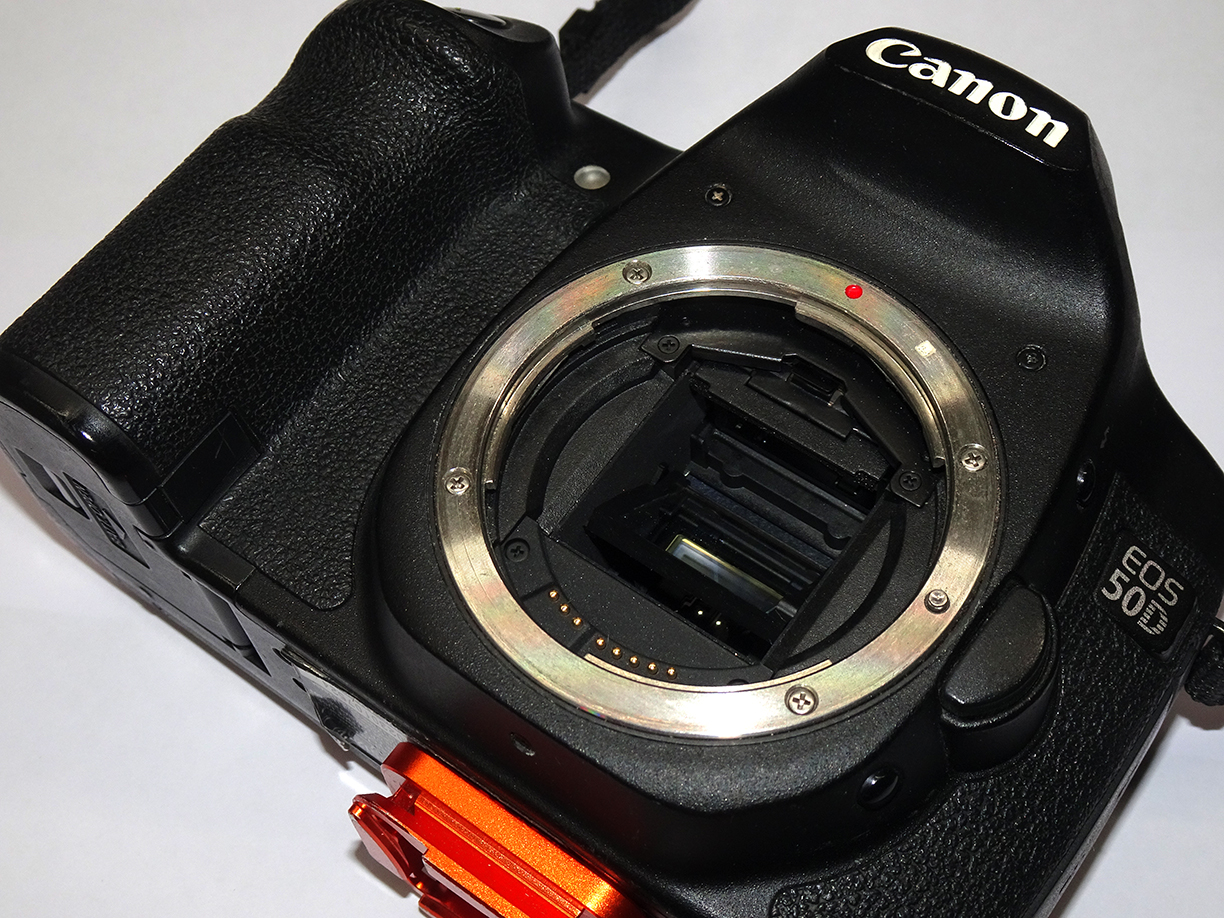
50D body.
The EF mount sits infront of a 15.1 megapixel APS-C sensor and a DIGIC 4 image processor. It shoots RAW files and one of the key upgrades for me was the live view on the screen. The low light performance is great, I don't have any modern DSLRs to compare it to, but back in the day its low noise levels on high ISO was groundbreaking. When you put new software on the CompactFlash card the ISO will go up to 12,800. It's very useable upto 1000. In burst mode it'll shoot 6 fps, 16 images in RAW and 90 in JPG. The shutter works at 1/8000 sec to 30 seconds and has a buld mode for long exposures. The noise cancellation on bulb is good, you can set the camera to reduce noise, if you take a 90 second star shot, when you close the shutter it takes the same length photo of the closed shutter and then sticks the two together in the processor to remove noise from the image. It's a bit annoying if you forget you have it on and do a 10 minute exposure!
It takes a BP-511 Li-Ion battery, I'm on my 5th set of 3 batteries now, and you can still buy em. It's a USB 2 mini USB interface (which is now a bit iffy). It takes CompactFlash memory cards so you can slot em into a card reader, which means the iffy USB isn't an issue.
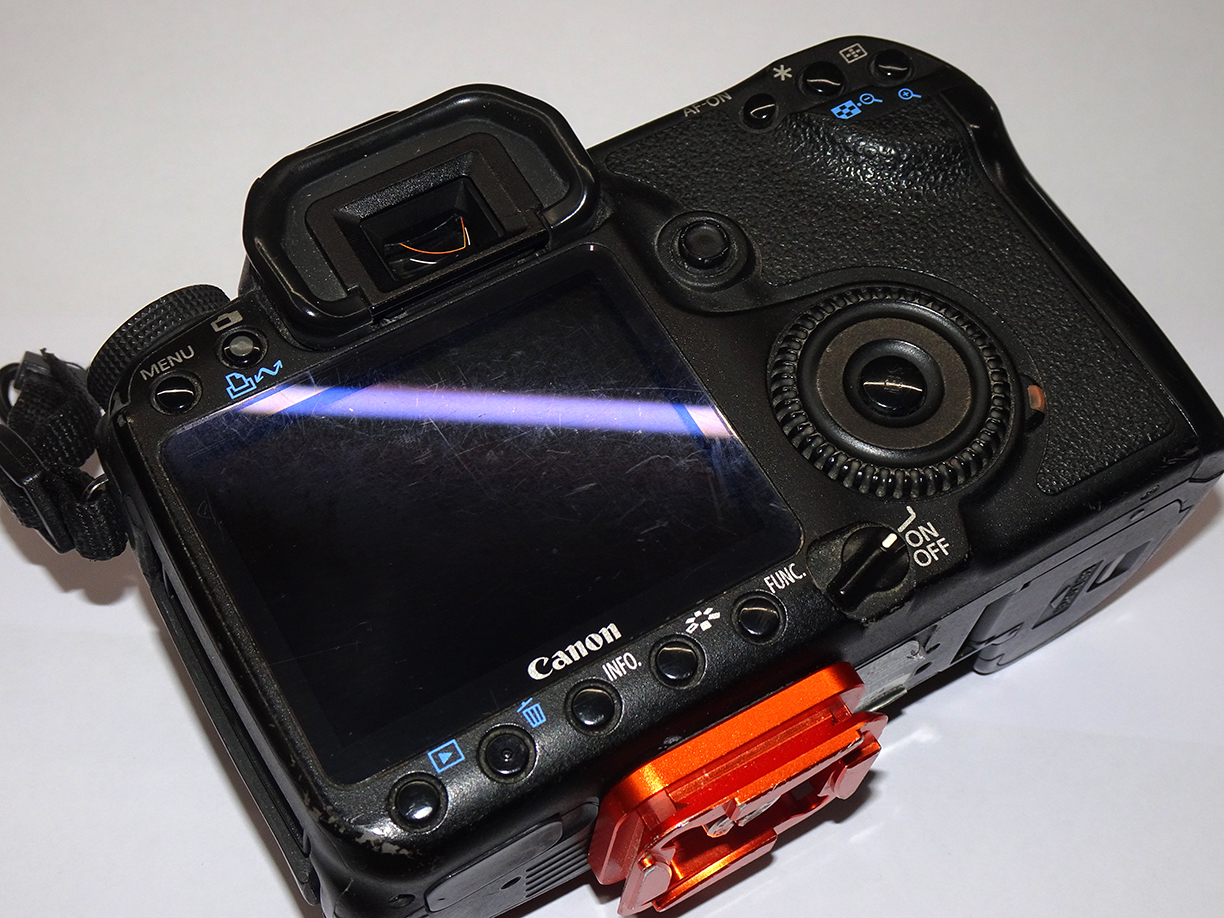
The battered screen.
Round the back there's a 76mm 640x480 screen and enough buttons to mean that changing settings or using functions all happen without having to root through menus. The eyeshield has been glued, but it works fine. The shoe on the bottom clicks it onto my three legged thing tripod. The coating on the screen is starting to fail, there's a blue tint to it, but it doesn't impact its useability. I seem to be saying but it doesn't matter a lot during this. It's an old camera! Bits have started to fail! But it still works as a camera.
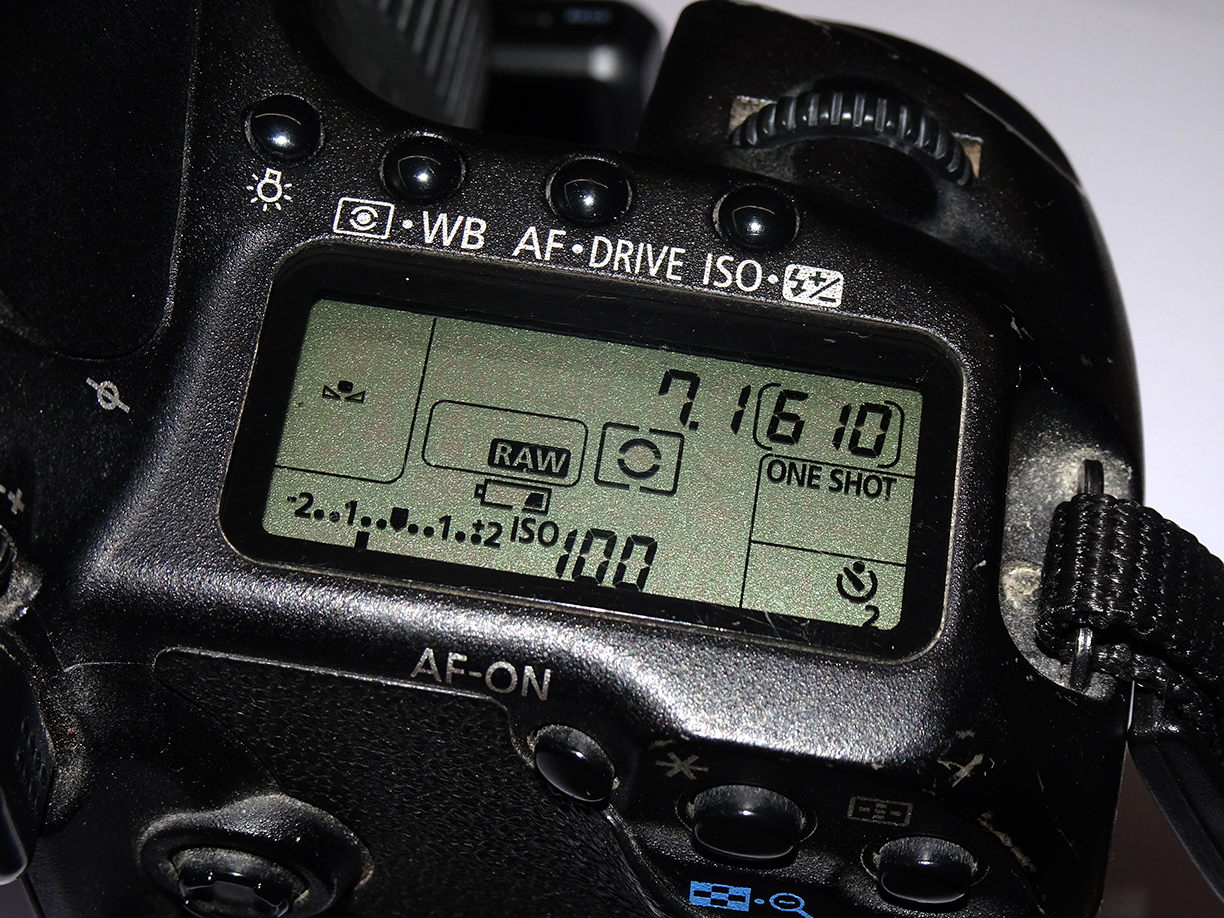
Top LCD.
Up top there's a 42mm LCD that shows you the vitals for a photo. Theres a few buttons too, so the same as round the back, changing things doesn't require menus. There's a hotshoe that allows you to attach Speedlite and compatible flashes.
Lenses
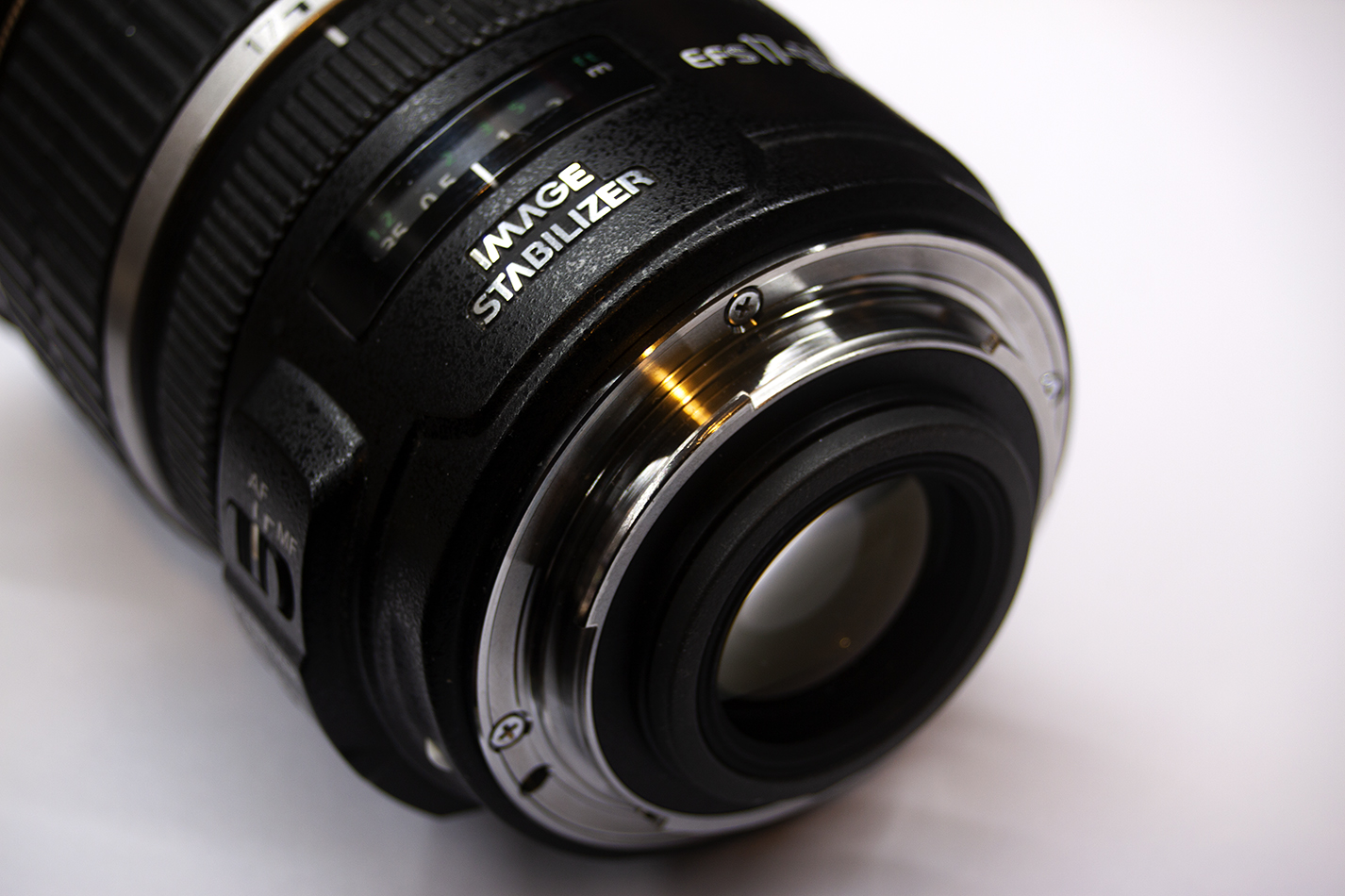
Canon EFS 17-55
This is my favourite lens. Unfortunately it has the iffy flex cable problem, I put it in a drawer some time ago and put it on the to be fixed list. Well today I ordered a new flex cable and it should be here in time for a christmas project. The repair involves disassembling the lens, swapping the connector and reassembling the lens. So it'll either be a tenner well spent or it'll be broken for ever. 50/50... I like them odds!
Canon EFS 17-55. Awesome lens, iffy flex connectors.
It's an F2.8 lens so it's pretty fast and it does nice bokeh. The lens takes lovely pictures. The image stabilization is spot on, the difference it makes to darker scenes is amazing. It focuses quickly, and its nice and quiet. The zoom is a little too easy, if you hold the lens straight down, it falls out, which is annoying. Nice scenery, nice portraits it's a belter.
As I said above it's got an iffy flex connector which is a well known weakspot with these. There's a new one en route from the land of the rising sun. I suspect replacing it will turn into a project of its own.
So in short, it's broken, and its got a crummy zoom that flops out, but I still really like it!
Random Desk Photo.
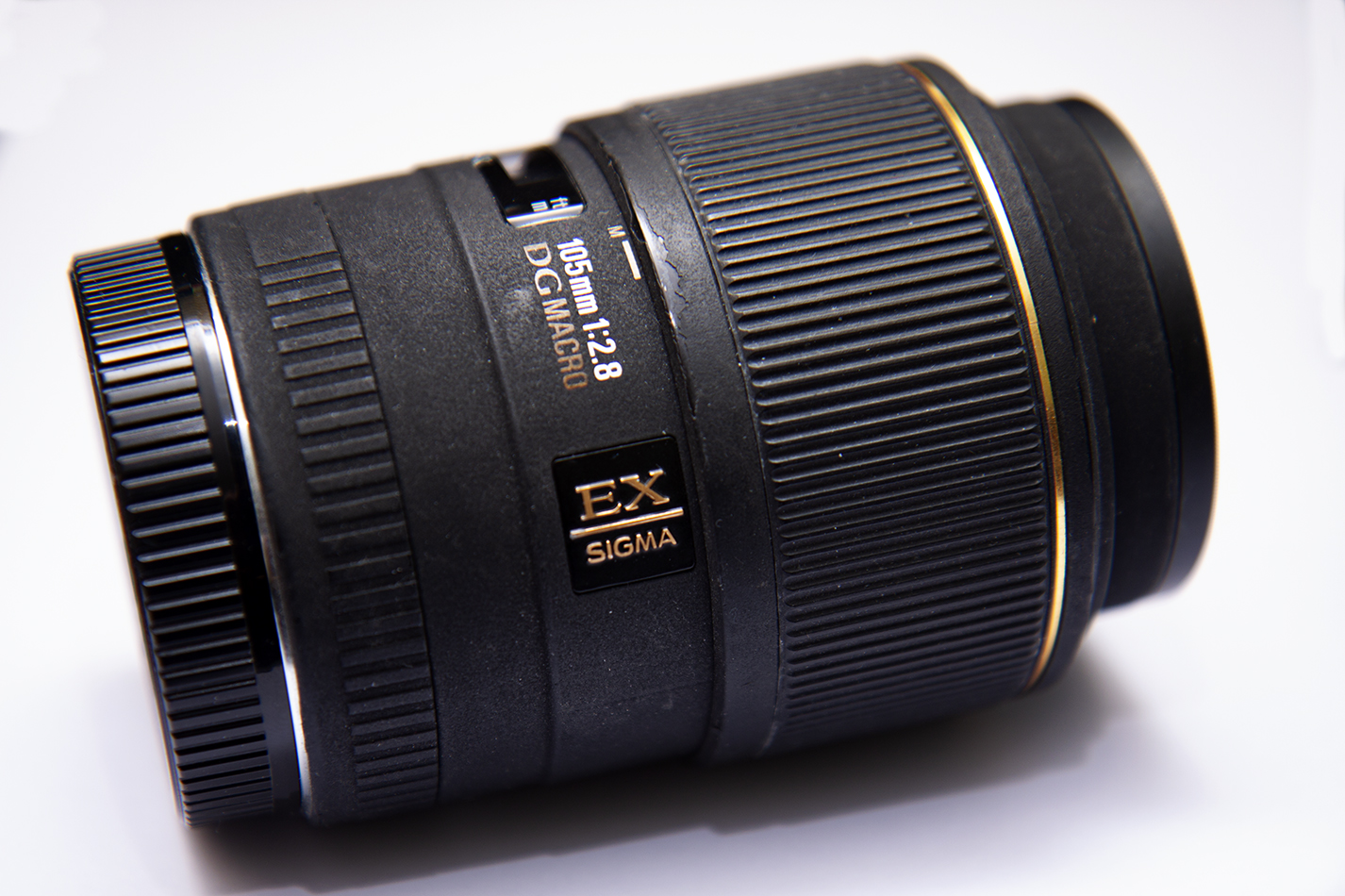
Sigma EX DG 105
This one has zero problems! It's an F2.8 105mm macro lens. It does nice bokeh and it also takes lovely pictures. It's excellent at macro stuff (obviously) but it works well outside too.
Sigma EX DG 105.
Point & Shoots
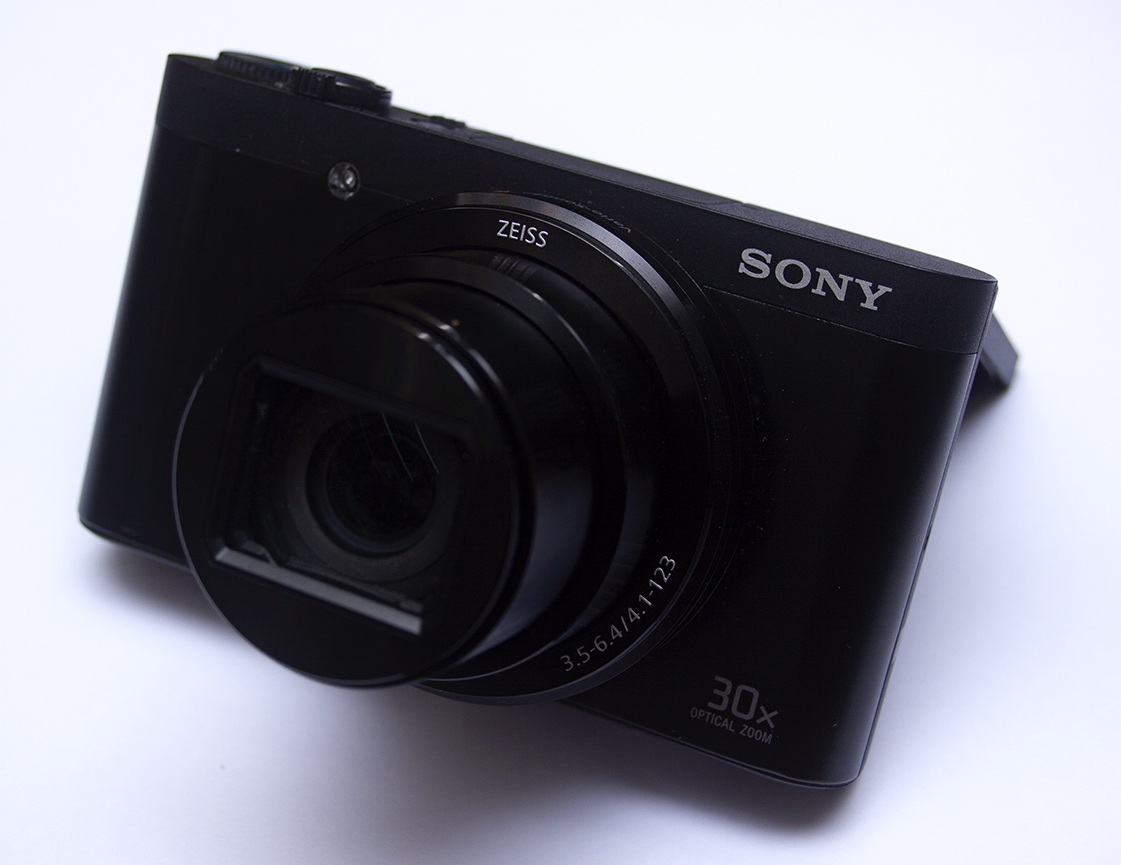
Canon Cybershot WX500
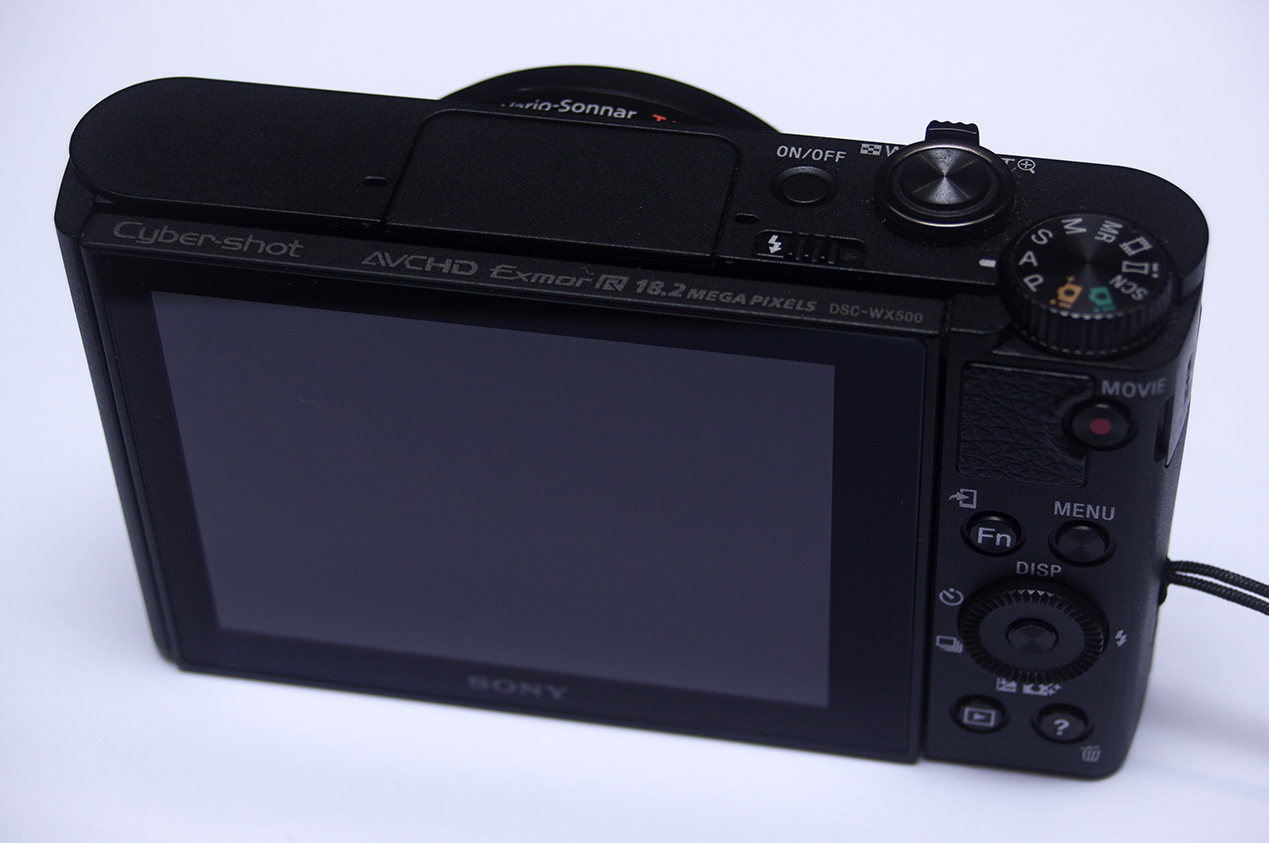
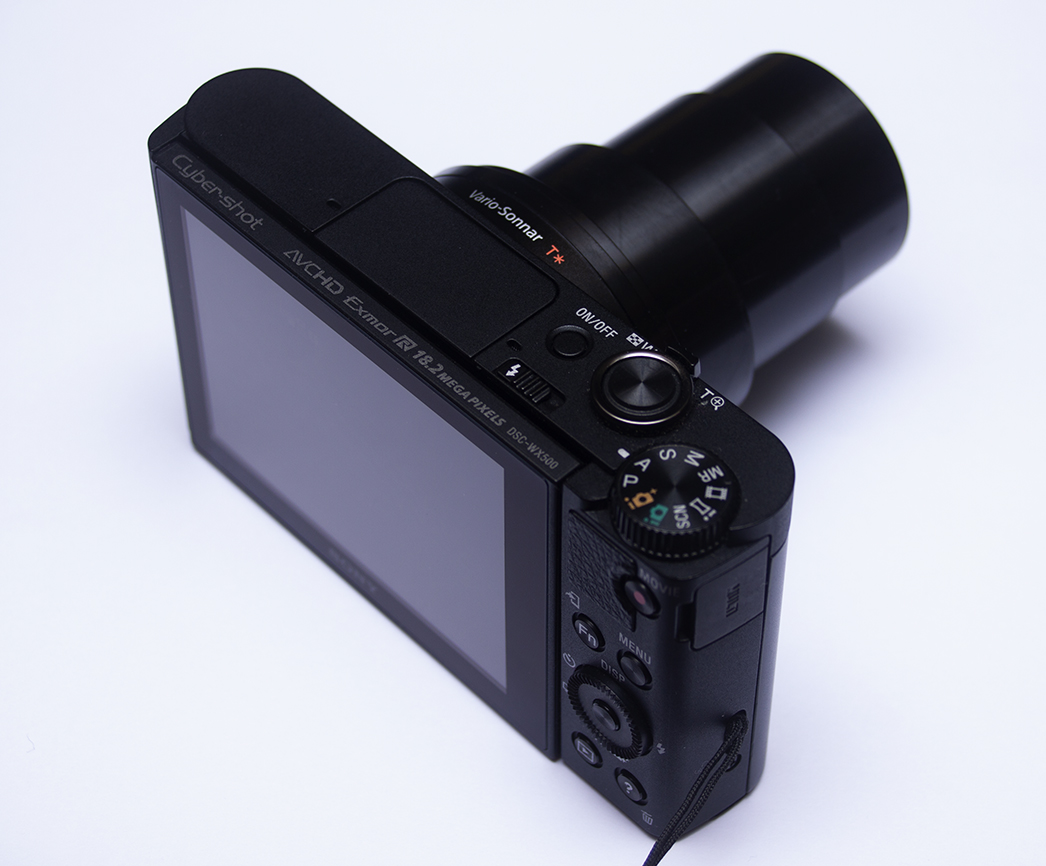
I've got a couple of 'live' point & shoot cameras. The one I use most often is a Sony Cybershot DSC-WX500. It's a tiny little thing, 100x58x35mm closed and it weight 234gr. Fits in a pocket easily, I got a case with a neck strap when I got it, and when it's on that under your arm, you don't notice it.
Cybershot WX500 Point & Shoot.
The sensor is an 18.2 megapixel Exmor R in front of a Bionz X image processor. Infront of all that is a Zeiss 24-720 lens. It shoots 10fps for upto 10 shots. Theres a 75mm 1280x720 articulating screen that can flip up to turn it into a selfie camera. It's got WiFi and a micro USB port on it for connectivity. It takes SD memory cards.
Interface.
There's plenty of buttons round the back, so most changes happen without the need for menus. The popup flash is pretty weak and there's no hotshoe, but that's to be expected for a pocket camera. It takes decent pictures. It's a nice middle ground between a big camera and a phone camera.
Fully zoomed, the lens is comically long.
The camera is ideal for trips out where you want that middle ground, something better than a mobile, but not the hassle of a DSLR. The battery lasts through a full day no problem, handily for a camera of this vintage it does charge via the USB (micro) so as long as you have a cable, you're good (another reason to have a cable bag).
Canon Ixus 110
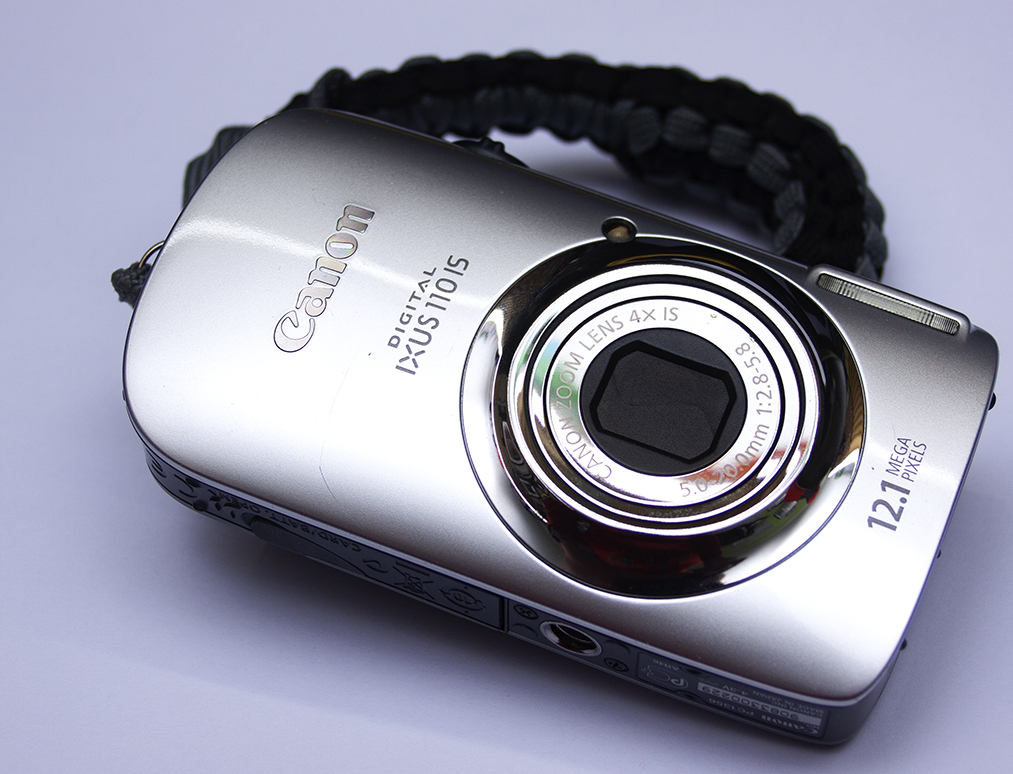
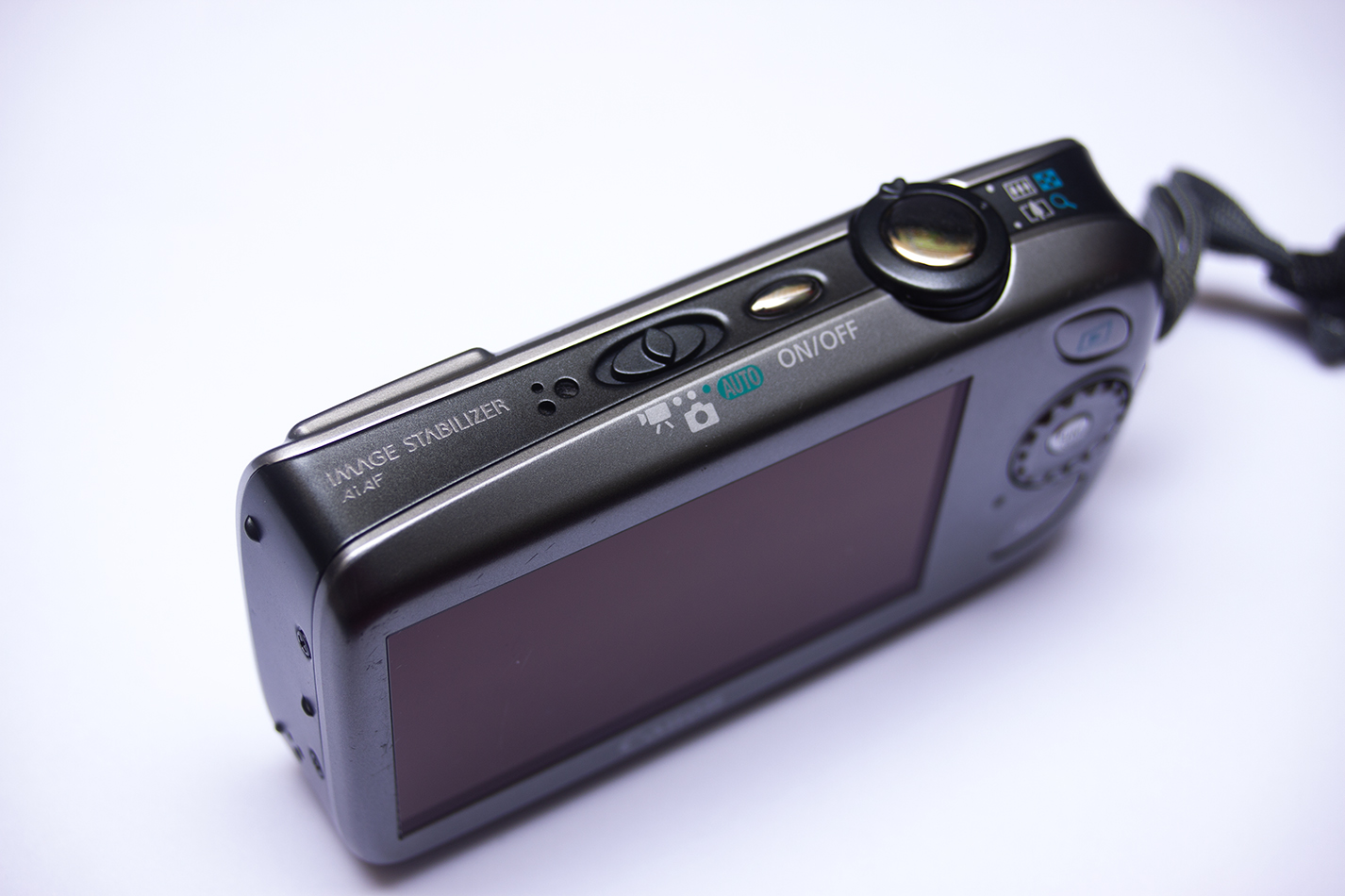
Another camera that has a special place in my heart, its Mrs Ts old Ixus 110. Mrs T isn't really into photography, but back in the day when phone cameras had potato sensors she wanted something better. I got her this. She used it a lot. It's now retired and lives on the shelf of old electronics.
Mrs Ts old Ixus 110.
Similar to my 50D this camera has seen most of the big events in our early life together, so it's got a special place in my heart. It's got a tiny little 12.1 megapixel sensor, a 28-112 lens. The videos it puts out are 720p. Round the back there's a 72mm screen. It takes an NB-4L Li-Ion box battery and SD memory cards. It's on its third battery.
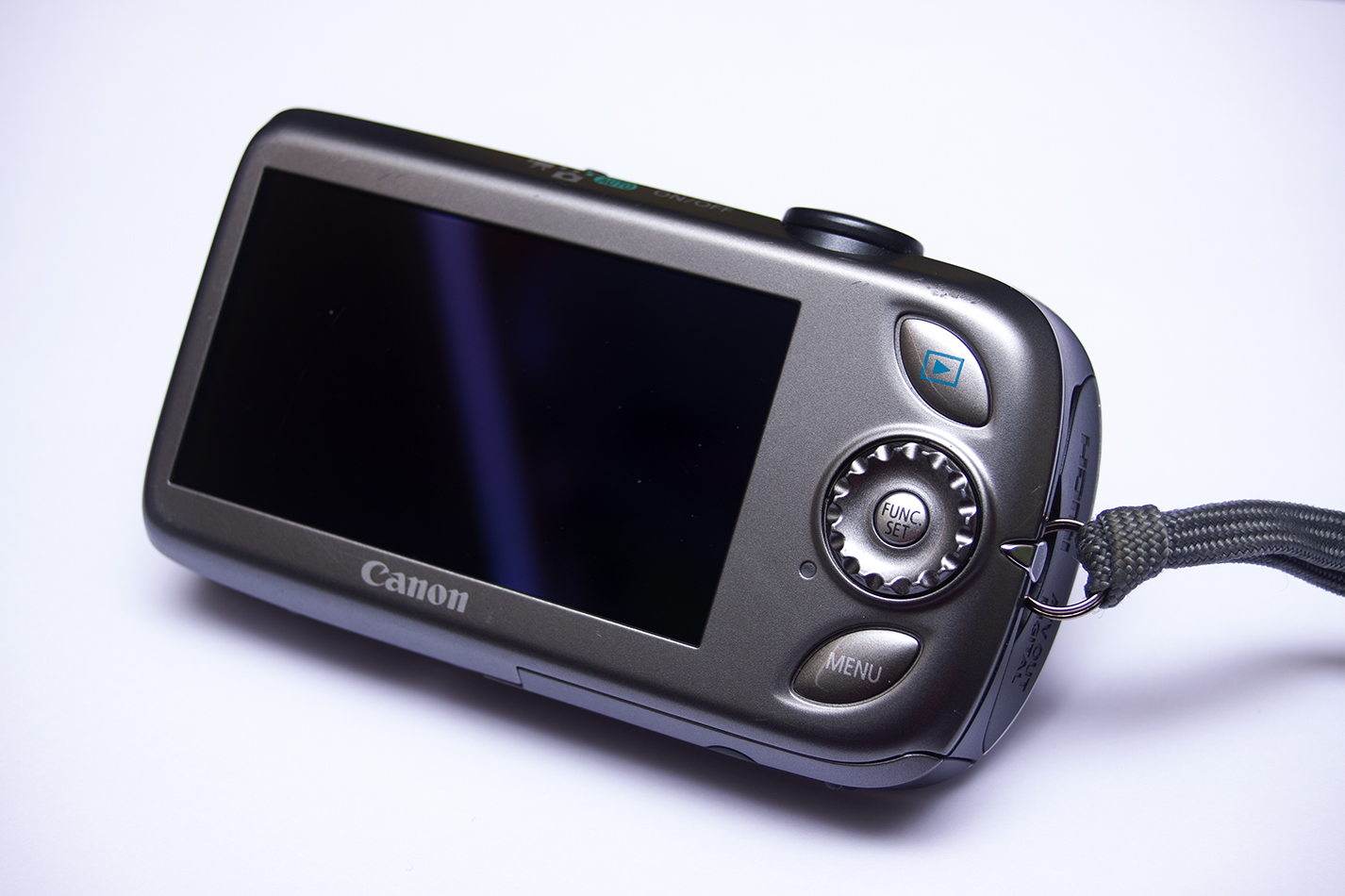
Ixus 110 Interface.
There's only three buttons and a wheel round the back so almost everything is hidden away in a menu, but this is not a camera that you fiddle with settings on, it's a true point and shoot. Buttons are for nerds, and this isn't a nerds camera. The screen sits pretty much flush with the back of the camera, so to protect it, it's spent its life in a case. We've had the camera since 2009, and considering that, it's in remarkably good nick (thanks case).
Top View.
Up top there's a slider to select video, picture or the dreaded full auto mode. Although not a photograhy person, Mrs T knew enough to be able to run the camera in manual-ish mode. Manual iso, manual aperture, auto shutter. It's another wee little thing, 95x52x24mm and weighs 160gr. It's a very rounded rectangle shape so fits nicely in a pocket.
Canon Powershot G1X
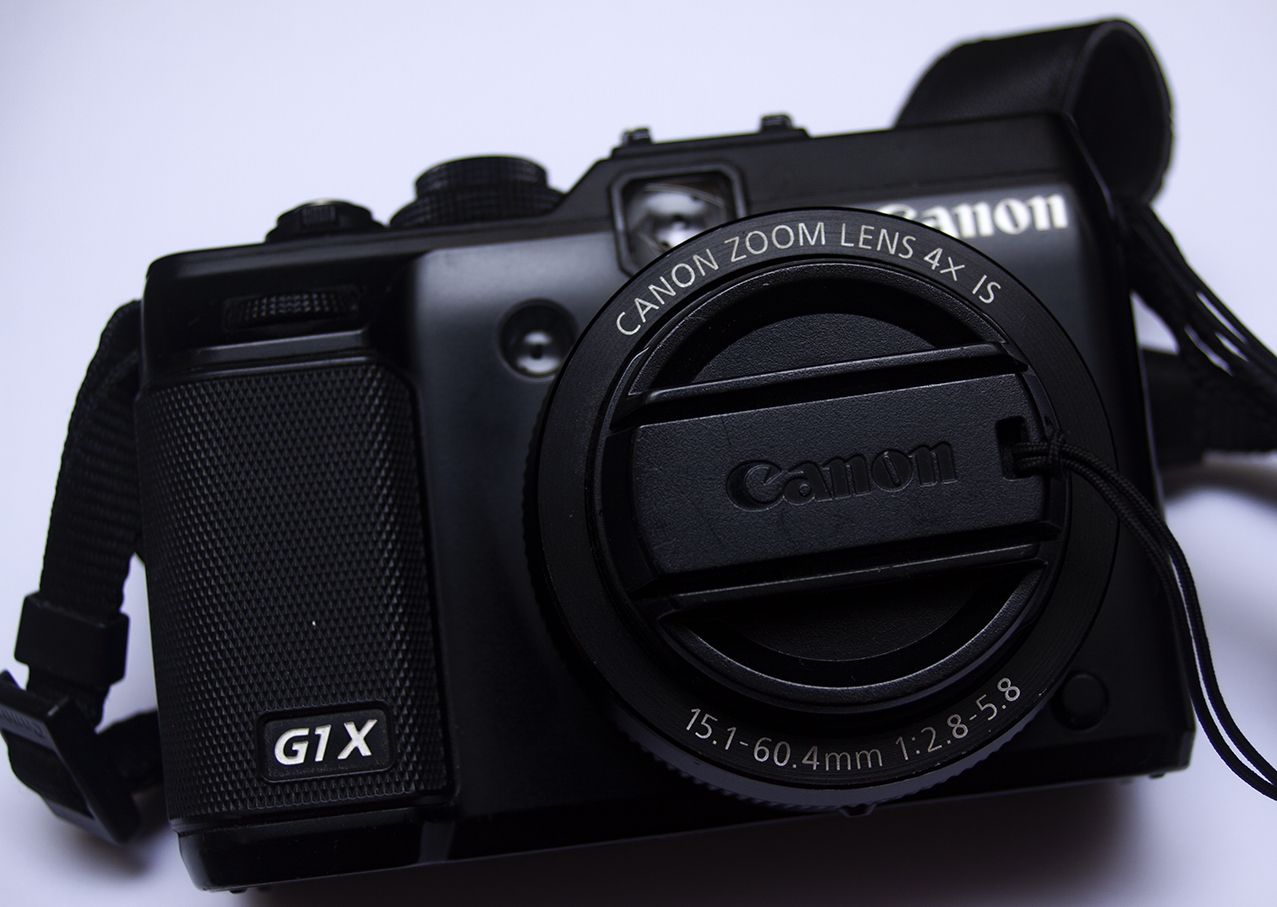
I'm not sure that this camera is a true point and shoot, it's got full manual controls and a decent number of buttons. I think it's a bridge camera, but this page is already far too long, so I'm sticking it in here. I got the camera in the summer of 2012. I wanted something more than a point and shoot for exploring when a DSLR wasn't practical. By this point I was a fully paid up Canon fanboy, so I chose this.
Canon Powershot G1X.
I never really fell in love with this camera, when I need a half way camera (smaller than a DSLR, better than a point & shoot) it's perfect but these situations are few and far between. It's not yet retired, but the last time I used it to take a picture was March 2024. Nothing about the camera makes it bad, the gap I bought it to fill just isn't as big as I thought it was. It's a me thing, not a camera thing.
It's a large (18.7x14mm) 14 megapixel sensor. Behind it is a Digic 5 image processor and infront is a 28-112 lens. The lens is fast for this type of camera, at 28mm it's f2.8 when you zoom this drops to 5.8 but that 2.8 is decent for a built in lens. It shoots RAW and the shutter is fast at 1/4000 it'll go to 60 seconds too. It shoots 1080p video and the quality of the video is good enough. It takes SD memory cards and has a mini USB for connectivity.
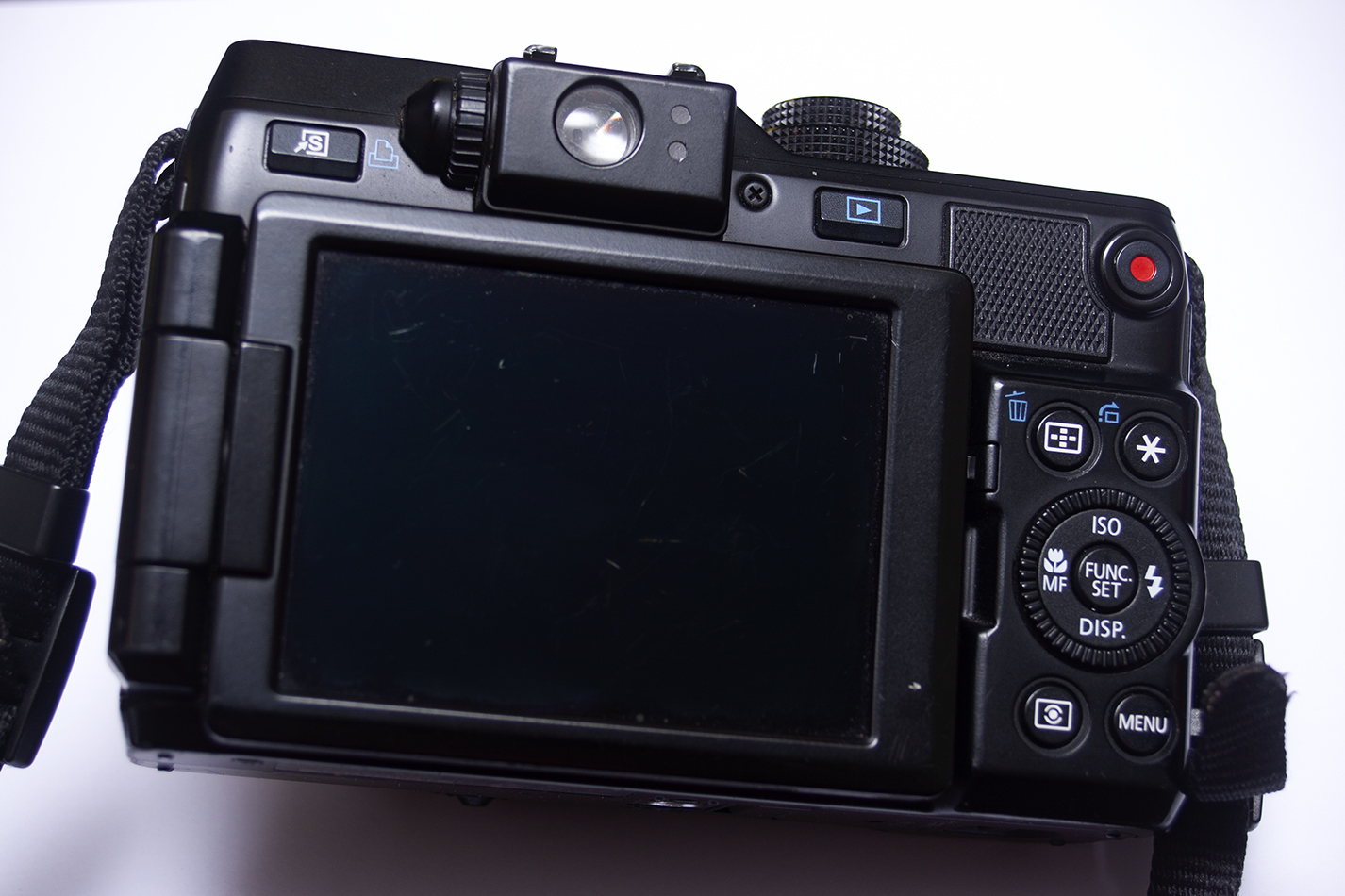
G1X Round Back.
Round the back is a fully articulating 1280x720 75mm screen. There's enough buttons to access most features without a menu and there's a dedicated button to start recording video. The pop up flash is OK, but the hotshoe means a weak built in flash is no problem. The battery is a 920mAh Li-Ion (NB-10L) and is enough to shoot for almost a full day. Disappointingly the mini USB doesn't charge the battery, so if you're out all day, you need a spare battery. As as indicator of how I didn't fall in love with this, it's still on it's first pair of batteries.
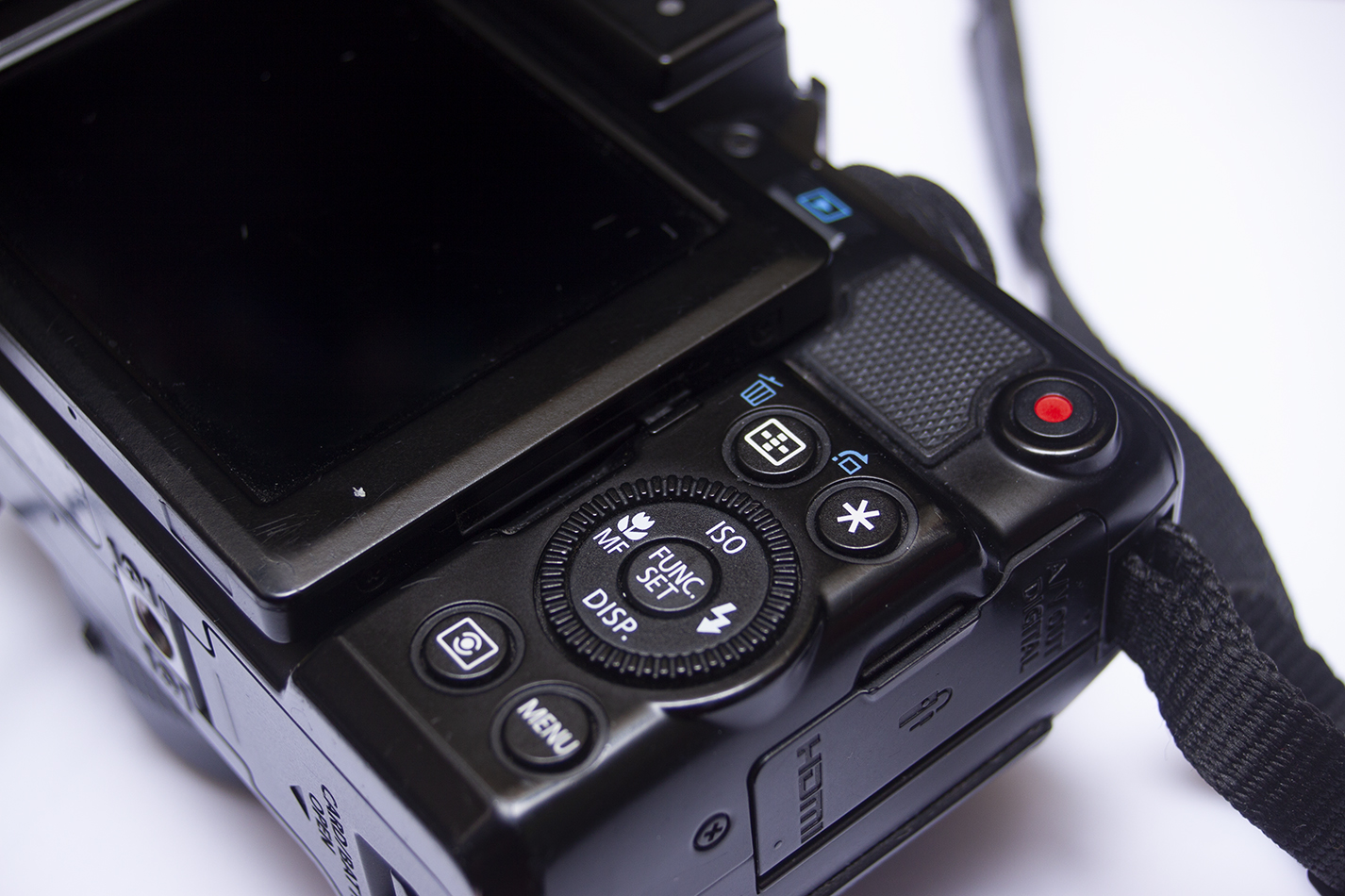
G1X Interface.
The buttons are great, a good size and nice and clicky. The scroll wheel has a press at 12, 3, 6 & 9 and a centre button. When you do need a menu, they're laid out in a logical way so it's easy to find things. The screen spins round so you can protect the face when it's not in use. In addition to the screen, there's a straight through view finder which isn't much use, I think it's included to make it look more legit.
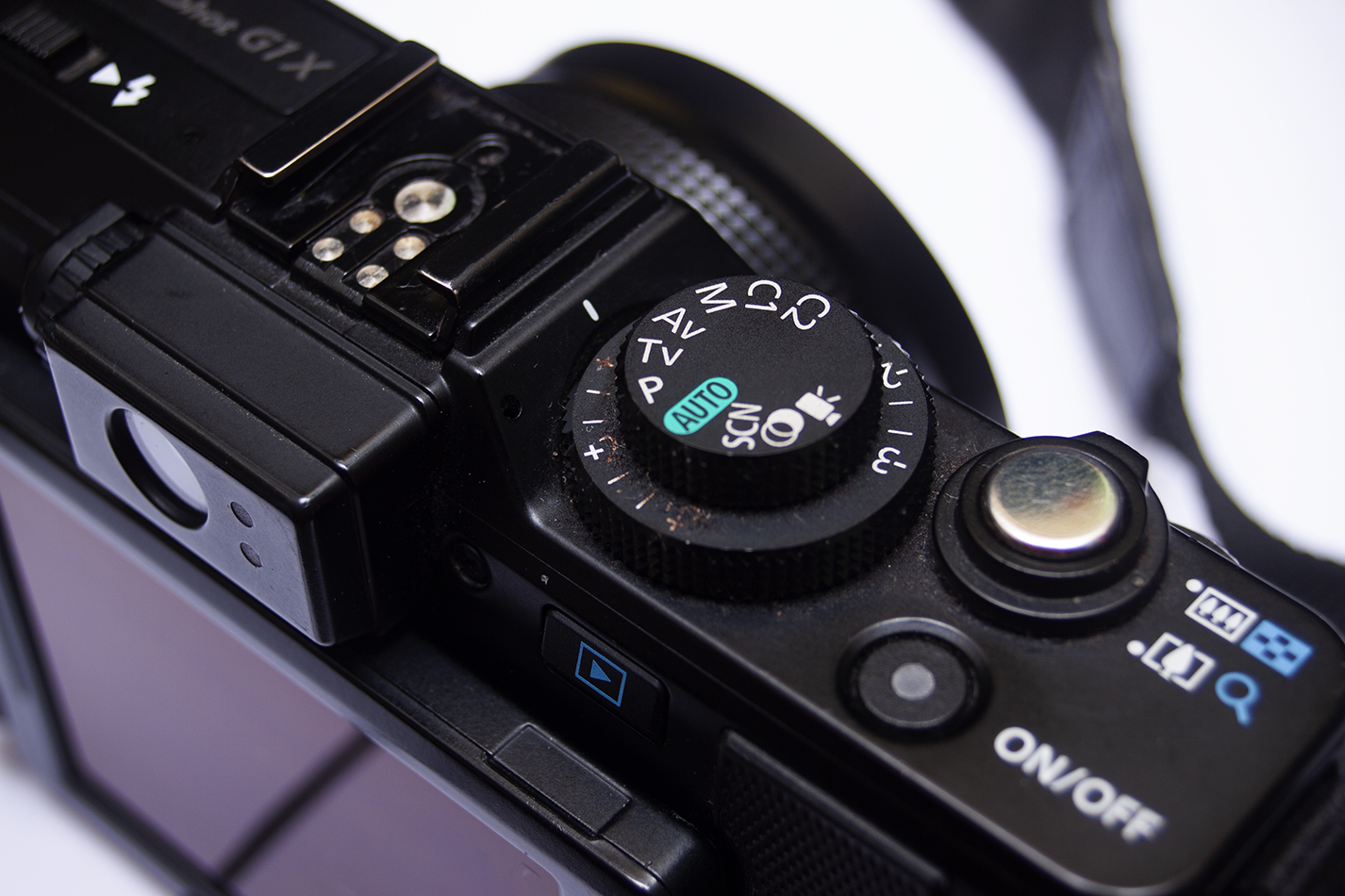
G1X Top "grubby" Interface.
Up top there's another set of well laid out controls, the smaller top dial changes modes and the bigger bottom dial adjusts exposure. The exposure dial is very useful. I'm not shure what the grubby residue is on the dial, again another indicator of how little use the camera gets. It's seen some interesting things. It's not retired, but spends most of its life on the shelf.